Autonomous Flying Robot based on Structural Battery
Development an ultra-high-efficiency autonomous surveillance drone inspired by bird flight and enabled by structural battery technology.
Duration: 2023.08 - 2025.12
Project Overview
This project aims to develop a super-efficient autonomous flying robot capable of long-endurance surveillance missions. By mimicking the flight mechanics of large birds (such as eagles or albatrosses), the robot utilizes a combination of gliding and flapping to maximize energy efficiency.
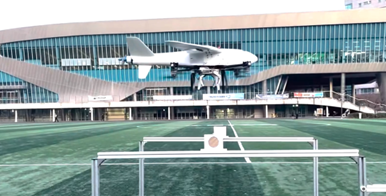 Fig 1. Concept art of the bio-inspired autonomous flying robot
Key Technologies
To achieve ultra-high efficiency and extended flight times, this research integrates two core technologies:
- Structural Battery Technology:
- Unlike traditional drones where batteries are dead weight, this project utilizes structural batteries that function as both the power source and the load-bearing structure (fuselage and wings).
- This integration significantly improves energy density and reduces overall weight.
- Biomimetic Flight Control:
- Learning-based Control: We utilize Reinforcement Learning (specifically PPO) to train flight policies that adapt to changing wind conditions.
- Soaring Strategies: The control algorithm is designed to exploit thermal updrafts and wind gradients, allowing the robot to glide for extended periods without consuming battery power, similar to how birds fly.
Research Goals
- Design and fabrication of a prototype using structural battery composite materials.
- Development of a navigation algorithm for autonomous thermal soaring.
- Demonstration of stable locomotion and surveillance capabilities in outdoor environments.
Acknowledgement
This work was supported by Agency for Defense Development (ADD) - Grant funded by Defense Acquisition Program Administration (DAPA) in 2020 (UD230004TD).