AI-Based Training Simulation Environment
Development AI agents for UGVs and drones using risk map-based planning an learning for a training simulator.
Duration: 2026.01 - present
Project Overview
This project focuses on developing intelligent maneuvering agents for Unmanned Ground Vehicles (UGVs) and Unmanned Aerial Vehicles (UAVs) within a virtual training simulator (MORAI SIM). The goal is to create a realistic training environment where autonomous systems can perform tactical maneuvers in complex terrains.
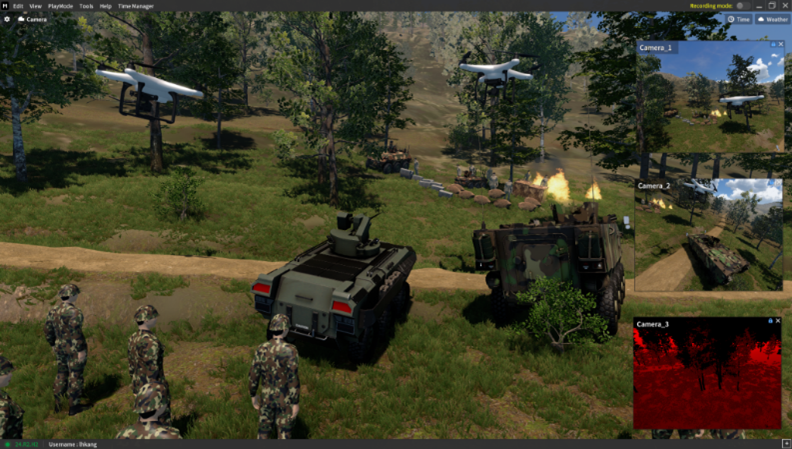 Fig 1. Simulation environment featuring UGV and UAV agents
Key Methodologies
The project implements distinct control strategies for the ground and aerial agents to maximize their operational efficiency.
1. UGV: Risk Map-based Path Planning & Control
For the UGV, the core strategy involves analyzing the terrain to ensure stable mobility.
- Risk Map Construction: The agent analyzes sensor observation histories to create a “Risk Map” that accounts for terrain features such as slope, roughness, and obstacles.
- Path Planning & Tracking: Based on the generated risk map, the system calculates optimal paths using algorithms like A* and executes precise path tracking using Model Predictive Control (MPC).
2. UAV: RL-based Reconnaissance
The UAV agent acts as a scout to support the UGV.
- Reinforcement Learning: We utilize Reinforcement Learning (RL) to train the drone’s flight policy.
- Objective: The agent learns scanning patterns that maximize area coverage for reconnaissance while simultaneously minimizing exposure to threats and avoiding collisions.
System Architecture
The AI agents interact with the MORAI SIM platform through a dedicated bridge interface. This architecture allows for real-time exchange of sensor data and control commands, enabling the rigorous testing of autonomous algorithms in a high-fidelity virtual environment.